Trekking Poles: Why You Should Use Them
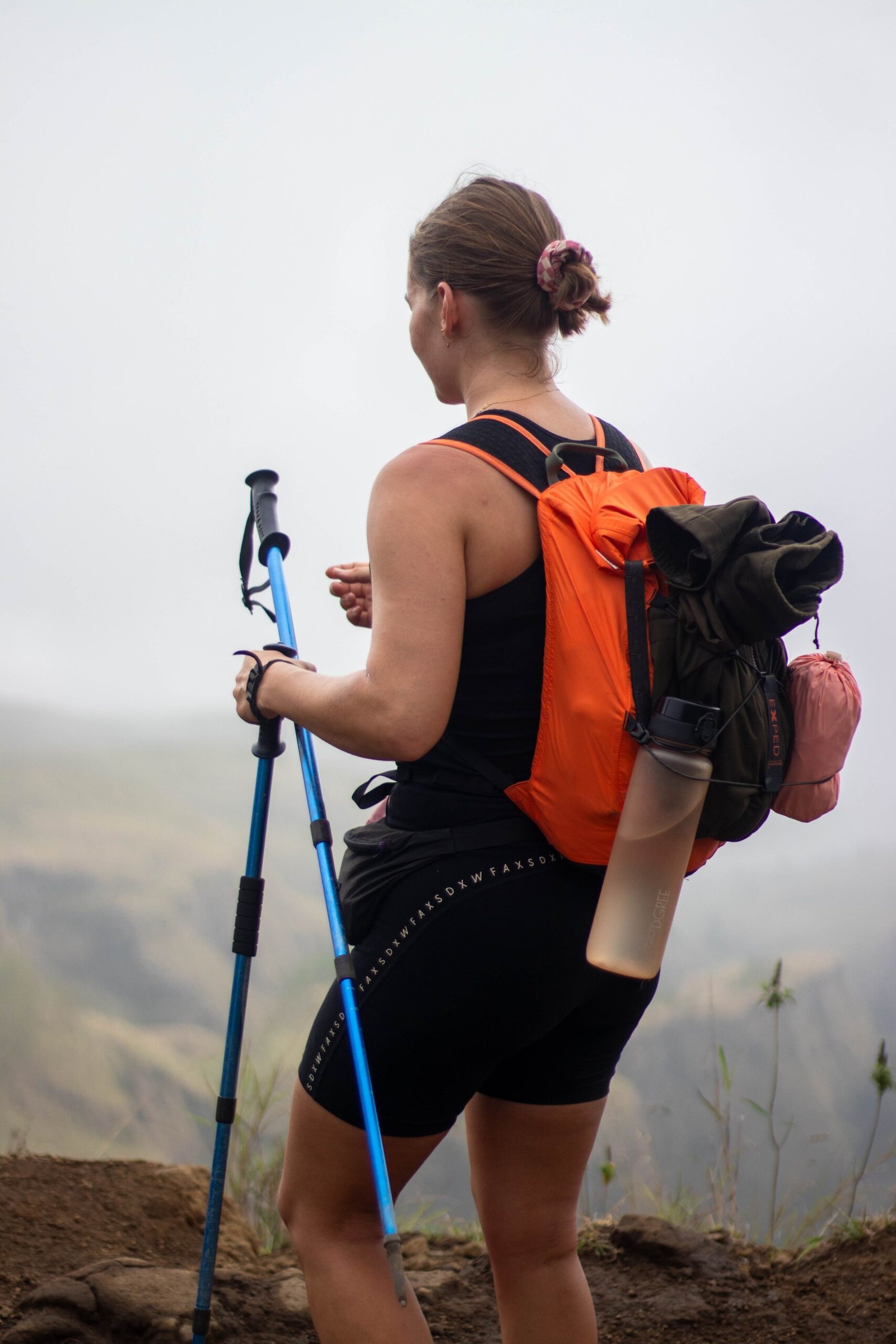
Trekking poles are more than just walking sticks. Here is how they help:
- Joint Protection: They reduce impact on your knees by up to 25%.
- Balance: Extra points of contact help on uneven terrain or stream crossings.
- Rhythm: They help establish a consistent pace on long climbs.
- Upper Body Workout: Engaging your arms helps burn more calories.
Adjust them so your elbow is at a 90-degree angle for maximum efficiency!
Real-World Lessons: Case Study
The Pacific Crest Trail (PCT) Thru-Hiker Survey: Every year, hundreds of hikers attempt the 2,650-mile Pacific Crest Trail. In long-distance community surveys, over 90% of successful finishers report using trekking poles. A notable story involves a hiker named “Strings,” who attempted the trail without poles to save weight. By the time he reached the Sierra Nevada mountains, he developed severe “trail knee” (patellofemoral pain). After reluctantly buying a pair of poles at a trail town, he found that the 25% reduction in impact allowed his inflammation to subside, enabling him to finish the remaining 1,500 miles.
Conclusion
While trekking poles might seem like an optional accessory, they are a fundamental tool for longevity on the trail. Whether you are a weekend warrior or a thru-hiker, the mechanical advantage they provide for your joints and the stability they offer during stream crossings are invaluable. Investing in a quality pair isn’t just about buying gear; it’s about investing in your ability to keep hiking for decades to come.